
India’s Most Critical Education Reform Movement Enters Day 34
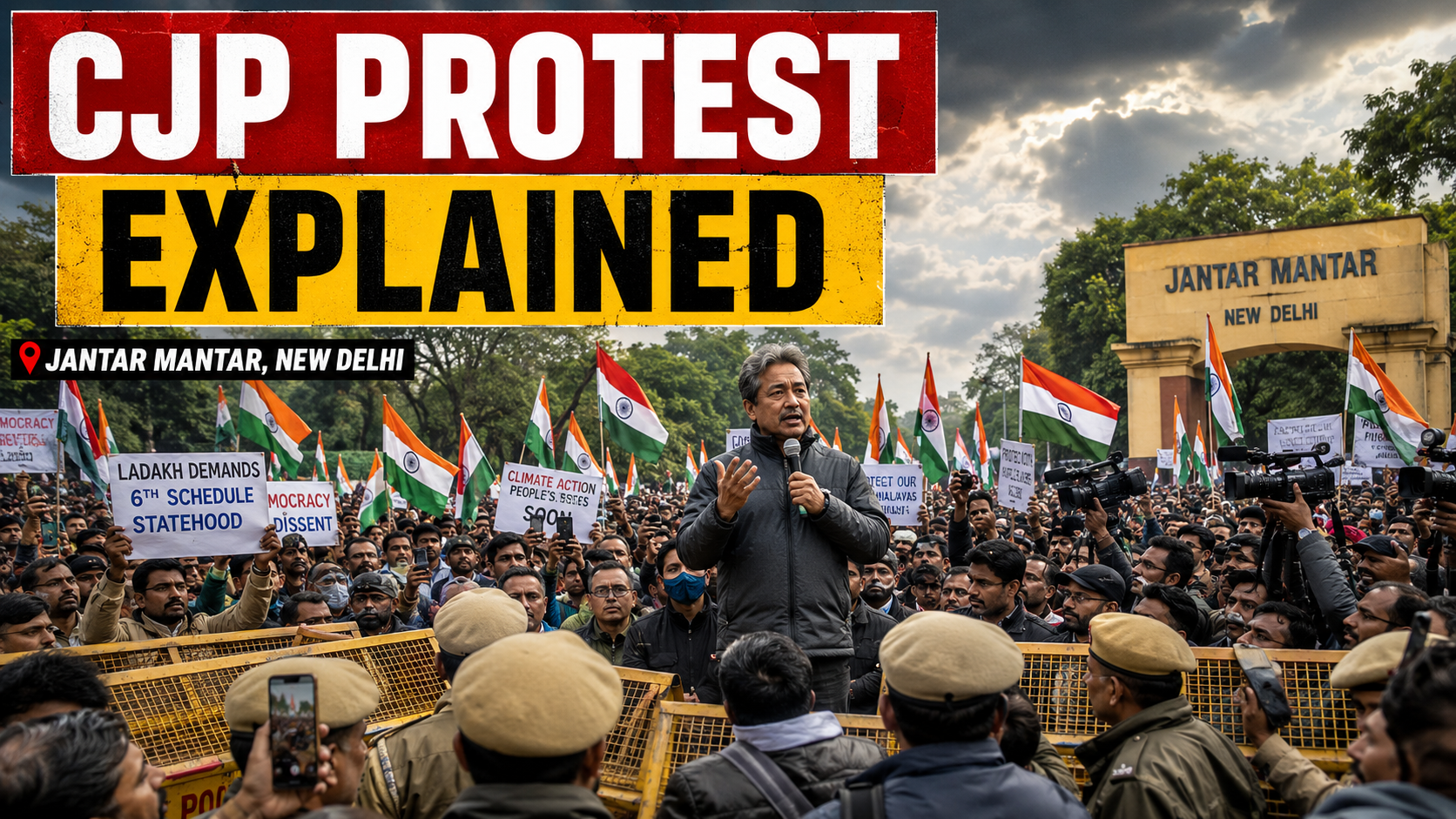
The Cockroach Janta Party (CJP) protest at Delhi’s Jantar Mantar has emerged as one of India’s most significant youth-led demonstrations in 2026. As of July 23, 2026, the protest has entered its 34th consecutive day, with thousands of students demanding accountability for NEET-UG exam irregularities and the resignation of Union Education Minister Dharmendra Pradhan. Climate activist Sonam Wangchuk’s ongoing hunger strike since June 28 has transformed this student movement into a nationwide educational reform crusade.
What is CJP and Why is It Trending?
CJP stands for Cockroach Janta Party—a youth-led political and social movement representing students demanding systemic reform in India’s education system. Unlike traditional political parties, the CJP protest is fundamentally a student-driven initiative focused on grassroots activism and examination transparency.
The CJP protest has garnered massive online attention. Searches for ‘CJP Protest,’ ‘Jantar Mantar Protest,’ ‘NEET-UG Irregularities,’ and ‘Sonam Wangchuk’ are trending consistently across Google and social media. This surge reflects genuine public concern about educational integrity and the credibility of India’s most competitive entrance examination system.
NEET-UG Exam Irregularities: The Core Issue
At the heart of the CJP movement lies a critical concern: widespread irregularities in the NEET-UG (National Eligibility cum Entrance Test – Undergraduate) examination. NEET-UG is India’s gateway examination for medical college admissions, determining the future of hundreds of thousands of aspirants annually.
Students protesting at Jantar Mantar have documented multiple anomalies in the examination process, raising serious questions about systemic integrity. The results announced in June 2024 sparked widespread surprise and controversy, with reports indicating that students receiving scores corresponding to ranks of 7,000 the previous year now received ranks of 27,000, raising questions about result credibility. The South First
Human Cost: Student Suicides and Psychological Impact
The examination irregularities have carried tragic consequences. Following the cancellation of the original examination and announcement of a re-test, at least 12 student suicides were reported within 37 days leading up to the RENEET scheduled for June 21, 2026, raising serious concerns over the mental health impact of exam-related uncertainty on aspirants. Among reported cases was a 17-year-old NEET aspirant from Goa and an 18-year-old aspirant from Nagpur, both reportedly distressed by the prospect of appearing for the examination again. Business StandardBusiness Standard
Why Protests Gained Momentum After RENEET
The 2026 Delhi Jantar Mantar protests escalated significantly following the announcement of RENEET, with protest organizers like activist Sonam Wangchuk beginning an indefinite hunger strike at the protest site on June 28, 2026. The combination of the paper leak scandal, the psychological toll of re-examination, and the visible toll in lives lost transformed initial social media activism into organized mass protests demanding accountability, NTA dissolution, and education minister resignation. Wikipedia
Sonam Wangchuk’s Hunger Strike: A Game-Changer
Men 50%OFF https://tinnu.alltripguide.in/men-fashion/
Climate activist and education reformer Sonam Wangchuk has become the public face of the CJP movement. Since June 28, 2026, Wangchuk has been on an ongoing hunger strike at Medanta Hospital in Gurugram, demanding the resignation of Union Education Minister Dharmendra Pradhan.
As an engineer, innovator, and founder of SECMOL (Students’ Educational and Cultural Movement of Ladakh), Wangchuk brings substantial credibility. His involvement has transformed the protest from a localized student demonstration into a nationwide movement. By July 23, 2026, he set specific conditions for ending his fast:
- Government must fulfill all previously given assurances
- Protesters must receive guaranteed protection against punitive legal action
- All negotiations must occur at Jantar Mantar, not government offices
Key Demands of the CJP Protest
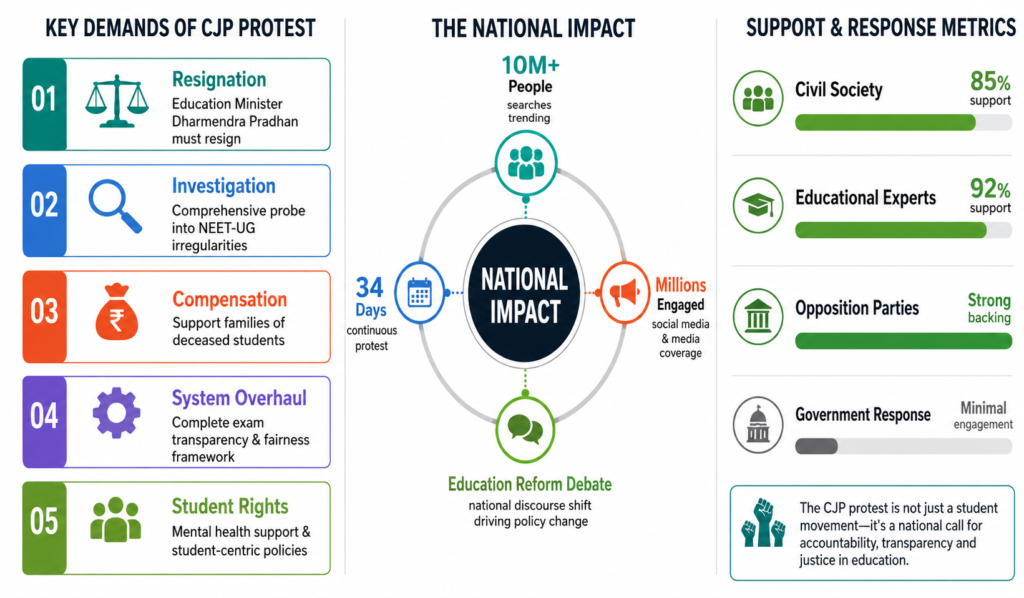
The CJP’s demands extend beyond a single minister’s resignation. The movement is pushing for comprehensive systemic educational reform:
- Resignation of Education Minister Dharmendra Pradhan
- Comprehensive investigation into NEET-UG exam irregularities and accountability
- Monetary compensation for families of students who died by suicide
- Complete overhaul of examination systems to ensure transparency and fairness
- Student-centric educational policies and mental health support programs
Timeline of Events
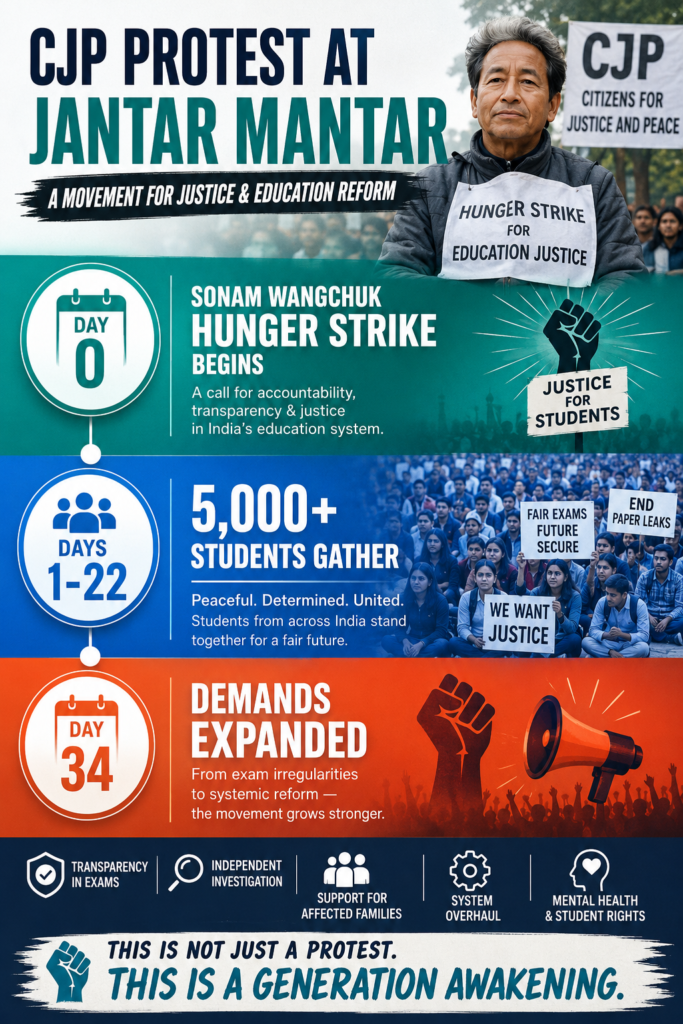
June 28, 2026: Sonam Wangchuk begins hunger strike demanding education minister’s resignation
July 1-22, 2026: The CJP Protest grows exponentially; thousands of students gather at Jantar Mantar daily
July 23, 2026:The CJP Protest reaches day 34; CJP announces expanded demands; Wangchuk hospitalized but continues fast
Ongoing: Government silence continues; nationwide media coverage intensifies; opposition parties voice support
Why Jantar Mantar Matters
Jantar Mantar in New Delhi is India’s officially designated space for peaceful public demonstrations. It has served as a symbolic venue for citizens to express their views through democratic and non-violent protests.
The site holds deep historical significance, from India’s independence movement to modern civil rights campaigns. Over the years, it has become a recognized platform for public advocacy and democratic participation.
By choosing Jantar Mantar, the CJP has aligned its protest with India’s long-standing tradition of peaceful civic action. The decision reinforces the movement’s commitment to constitutional and non-violent methods.
The 34-day continuous protest highlights the determination and organizational strength of the CJP protest . It also reflects their sustained effort to draw public attention to the issues they seek to address.
Government Response & Political Reactions
As of July 23, 2026, the central government has not officially addressed the core demands. This silence has intensified public frustration and expanded the protest’s reach.
Supporters—including civil society organizations, educational experts, and opposition parties—have backed the CJP’s demands for examination reform and transparency. Critics question whether targeting specific individuals addresses systemic failures. However, the government’s unwillingness to engage in transparent dialogue has itself become a secondary political issue.
Impact on National Education Discourse
Puma Shoes 40%off CJP Protest at Jantar Mantar 2026
The CJP protest has catalyzed a national conversation about educational accountability. Public discourse now centers on examination system audits, mental health support for aspirants, educational equity, and civil society’s role in governance accountability.
Educational experts and policymakers increasingly acknowledge that India’s competitive examination system requires comprehensive reform. Regardless of the protest’s immediate outcome, the movement has forced national recognition of systemic educational failures.
Conclusion: A Watershed Moment for Indian Education
The CJP protest at Jantar Mantar represents a critical moment in India’s educational history. Whether or not the government accedes to immediate demands, the CJP protest movement has achieved something significant. It has successfully elevated educational accountability to the status of a national priority.
Sonam Wangchuk’s hunger strike and the sustained presence of thousands of students have made it impossible to ignore systemic failures. The protest demonstrates that India’s youth are not passive recipients of educational policy but active agents demanding change.
As the movement continues, it will likely influence education policy discussions for years to come. For students, parents, educators, and policymakers, the CJP protest represents an essential national conversation about the future of Indian education.